Fluoride Guidelines
The Philippine Pediatric Dental Society (PPDSI) intends this guideline to help practitioners and parents make decisions concerning appropriate use of fluoride as part of the comprehensive oral health care for infants, children, adolescents, and persons with special health care needs.
When used appropriately, fluoride is both safe and effective in preventing and controlling dental caries. Decisions concerning the administration of fluoride are based on the unique needs of each patient, including the risks and benefits.
The PPDSI recognizes that there is no water fluoridation in the Philippines except in certain areas in the region of Cavite where fluoride in water is found naturally. Effective systemic fluoridation can be achieved through the intake of daily fluoride supplements. Before supplements are prescribed, it is essential to review dietary sources of fluoride (eg, all drinking water sources, consumed beverages, prepared food, toothpaste) to determine the patient’s true exposure to fluoride. If an informed decision is made by both the parent and the dentist to give systemic fluoride through the use of tablets, drops or vitamins, the dietary fluoride supplementation should be followed on Table 1.
| Age | < 0.3 ppm F | 0.3–0.6 ppm F | > 0.6 ppm F |
|---|---|---|---|
| Birth – 6 months | 0 | 0 | 0 |
| 6 mos – 3 years | 0.25 mg | 0 | 0 |
| 3–6 years | 0.5 mg | 0.25 mg | 0 |
| 6–16 years | 1.0 mg | 0.5 mg | 0 |
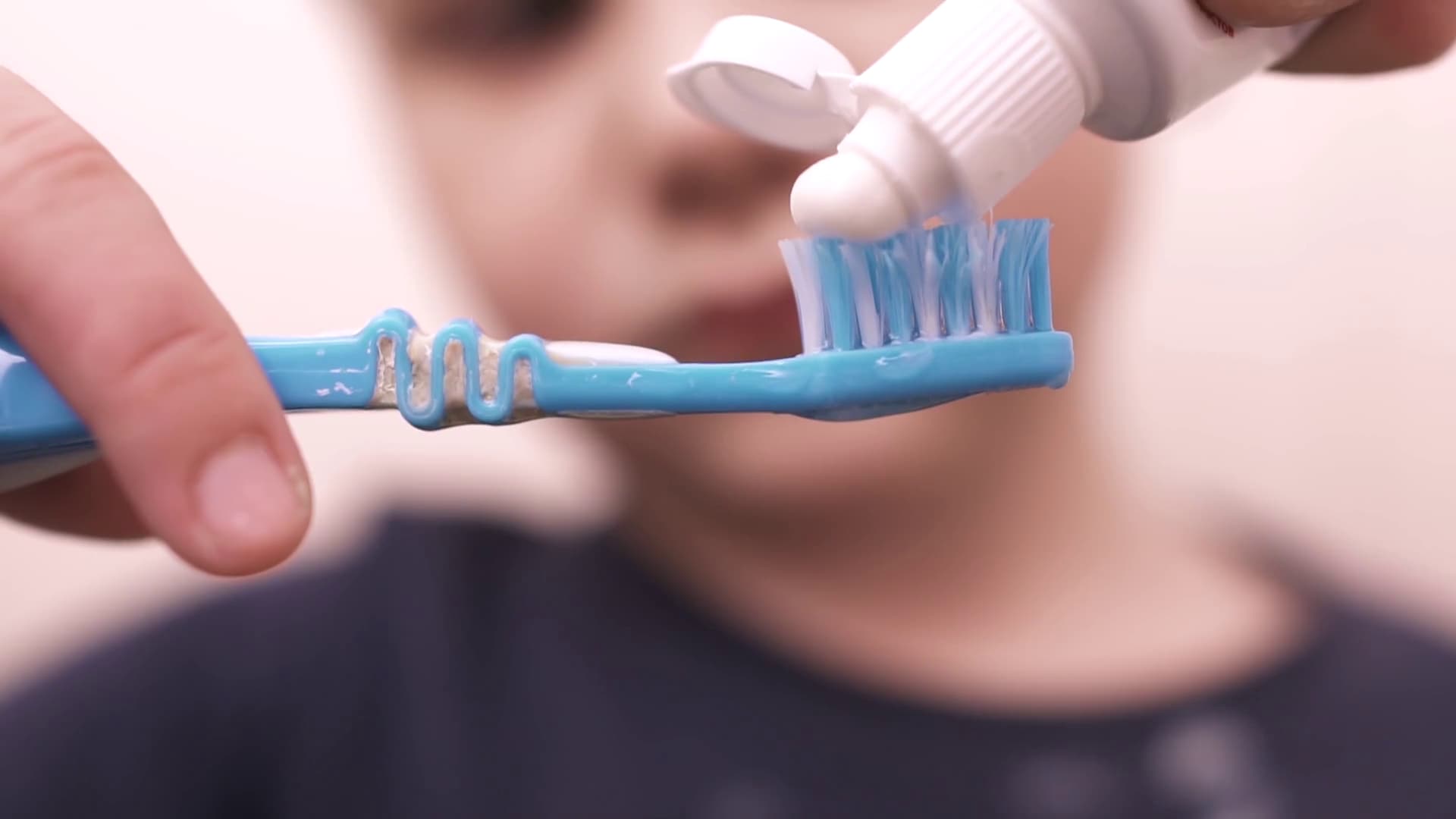
The PDCP highly supports various topical fluoride applications in the form of toothpastes, mouthrinses and varnishes, especially with the lack of water fluoridation in the Philippines. The PDCP encourages home use of fluoride products for children that focus on regimens that maximize topical contact, in lower-dose higher-frequency approaches. Tootng should start as soon as the first tooth erupts. The use of fluoridated toothpastes should be used twice daily as a primary preventive procedure. Toothbrushing last thing at night before bedtime is recommended. Children under 2 years old should use a smear size of toothpaste containing no less than 1000 ppm fluoride and that children 2 years old and above should use a pea-size toothpaste containing 1350-1500 ppm of fluoride. Spitting out excess toothpaste and no water rinsing is preferable because thorough rinsing reduces the fluoride in the mouth to sub-optimal conditions.
Other topical fluoride products, such as daily use of 225 ppm (0.05%) sodium fluoride mouthrinse or weekly use of 900 ppm (0.2%) sodium fluoride mouthrinse have been shown to be effective in reducing dental caries in permanent teeth.
Professionally-applied topical fluoride treatments are efficacious in reducing prevalence of dental caries. The most commonly used agents for professionally-applied fluoride treatments are 5 percent sodium fluoride varnish (NaFV; 22,500 ppm F) and 1.23 percent acidulated phosphate fluoride (APF; 12,300 ppm F). The efficacy of fluoride varnish in primary teeth when used at least twice a year has been reported in at least 4 randomized controlled trials. The efficacy of fluoride varnish in permanent teeth, applied at 3 or 6 month intervals, also has been reported in at least 4 randomized controlled trials. As the risk categories may change over time, the type and frequency of preventive interventions should be adjusted. 1.
The fluoride recommendations of PPDSI are summarized in Table 2.
| Fluoride Vehicle | 6 mos-2 yrs | 2-6 years | 6 years and above |
|---|---|---|---|
| Water Fluoridation | 0.5-1 ppm | 0.5-1 ppm | 0.5-1 ppm |
| Fluoride toothpaste Frequency Concentration Amount | Day and night 1000 ppm Smear 2.5 mm | Day and night 1350-1500 ppm Pea size 5 mm | Day and night 1500 ppm Half brush 10 mm |
| Fluoride mouthrinse Frequency Time Amount | None - - - | When able to spit Daily for 1 minute 10 ml | Daily for 1 minute 10 ml |
| Fluoride Gel | - | - | 2-4 times a year* |
| Fluoride Varnish | 2-4 times a year* | 2-4 times a year* | 2-4 times a year* |
* Frequency of application depends on caries risk assessment.
Recommendations
- There is confirmation from evidence-based reviews that fluoride use for the prevention and control of caries is both safe and highly effective in reducing dental caries prevalence.
- There is evidence from randomized controlled trials and meta-analyses that professionally applied topical fluoride treatments as 5 percent NaF varnish preparations are efficacious in reducing caries in children at caries risk.
- There is evidence from meta analyses that fluoridated toothpaste is effective in reducing dental caries in children with the effect increased in children with higher baseline level of caries, higher concentration of fluoride in the toothpaste, greater frequency in use, and supervision.
- There is evidence from randomized clinical trials that daily use of 225 ppm (0.05%) sodium fluoride mouthrinse or weekly use of 900 ppm (0.2%) sodium fluoride mouthrinse are also effective in reducing dental caries in children.
Policy on Use of Fluoride
The Philippine Pediatric Dental Society, Inc. (PPDSI), affirming that fluoride is a safe and effective adjunct in reducing the risk of caries and reversing enamel demineralization, encourages public health officials, health care providers, and parents/caregivers to optimize fluoride exposure.
The PPDSI recognizes that there is no water fluoridation in the Philippines except in certain areas in the province of Cavite. Effective systemic fluoridation can be achieved through the intake of daily fluoride supplements. Before supplements are prescribed, it is essential to review dietary sources of fluoride (eg, all drinking water sources, consumed beverages, prepared food, toothpaste) to determine the patient’s true exposure to fluoride. It is aware of the other forms of systemic fluoride in the Philippines in the form of drops, fluoridated bottled water and as a part in a multi-vitamin syrup. Considering the potential for mild fluorosis, caution is advised for those who are given systemic fluoride.
Since the majority of the Philippines has no water fluoridation, topical application of fluoride is highly recommended. Significant cariostatic benefits can be achieved by the use of over-the-counter fluoride-containing preparations such as toothpastes, gels, and rinses. Monitoring children’s use of topical fluoride-containing products, including toothpaste, may prevent ingestion of excessive amounts of fluoride. Numerous clinical trials have confirmed the anti-caries effect of professional topical fluoride treatments, including 1.23 percent acidulated phosphate fluoride and 5 percent neutral sodium fluoride varnish.
The PDCP
- Encourages the toothpaste manufacturers to indicate in their labels the amount of fluoride concentration
- Encourages dental professionals to inform medical peers of the potential of enamel fluorosis when excess fluoride is ingested prior to enamel maturation.
- Encourages the continued research on safe and effective fluoride products.
- Supports the delegation of fluoride application to auxiliary dental personnel or other trained allied health professionals by prescription or order of a dentist after a comprehensive oral examination or by a physician after a dental screening has been performed.
- Encourages all beverage manufacturers to include fluoride concentration with the nutritional content on food labels.
- Recognizes that toothbrushing with a fluoridated toothpaste at least twice a day and professional topical fluoride application at least twice a year will help in caries prevention.